Google is changing how it shows sources inside AI answers. If you work in SEO, the Google AI link attribution update deserves a calm, practical look, not a panic.
My first reaction was positive. Strong, credible content can still earn visibility through citations and links. But the update also raises a fair question: will more visible links actually bring more clicks?
Here is what changed, what I think matters most, and what to do about it.
What Is Google AI Link Attribution?
AI link attribution is how Google shows the sources behind an AI-generated answer. Earlier on, many publishers felt these links were an afterthought.
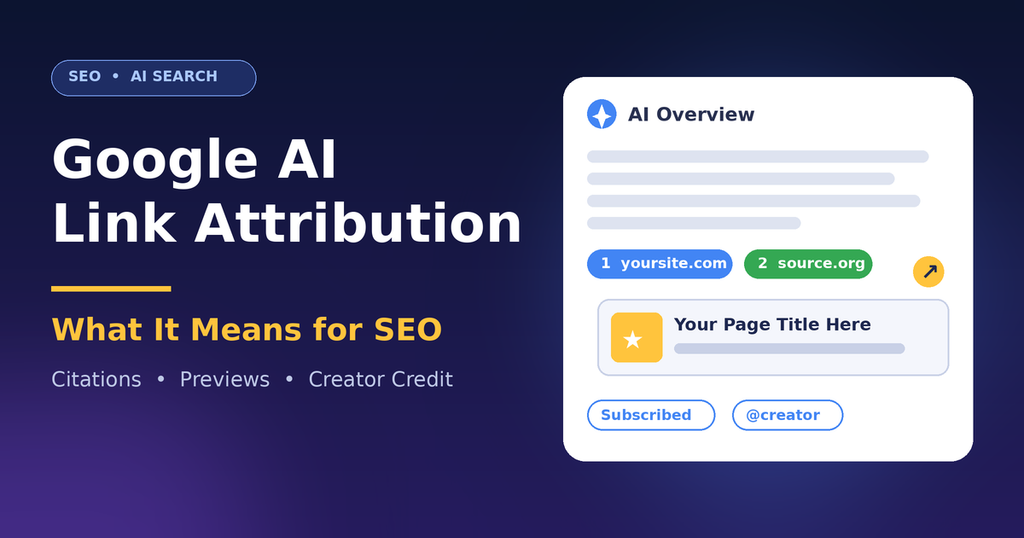
Google rolled out five link-focused features inside AI Overviews and AI Mode. They cover inline citations, hover previews, subscription links, social attribution and suggested follow-up topics. seotericconversion
The five updates at a glance
| Update | What it does | Why SEOs should care |
| Inline links | Places links closer to the relevant text | Citations become easier to notice |
| Hover previews | Shows a quick preview of the destination on desktop | Titles and page clarity matter more |
| Subscription links | Highlights publications a user already subscribes to | Helps brands with a loyal audience |
| Social attribution | Adds creator names, handles, or community names | Author and creator profiles gain value |
| Suggested follow-ups | Points to deeper articles on specific angles | Niche, in-depth content has a path to visibility |
Note that subscription links arrive first in the Gemini app and will extend to AI Overviews and AI Mode later, with no date announced. So that one is not fully live in search yet. conversion
Why Google AI Link Attribution Matters for SEO
The biggest change from Google AI link attribution is where visibility happens. Users may read an AI answer without opening a traditional result. A citation inside that answer can still put your brand in front of them.
I think the clickable citations matter most in Google AI link attribution. They give high-quality pages exposure even when people don’t browse the usual results. They also give your brand a chance to earn qualified traffic as the trusted source behind the answer.
That said, don’t assume clicks will return in full. Google’s own tests suggest people click noticeably more on links marked as their subscriptions, but that depends on how many publishers take part. Whether Google AI link attribution lifts referral traffic more widely is still an open question.smartworld
What I’ve Seen So Far
I’ve noticed pages showing up in AI-generated results, mostly when they answered a specific question head-on. The pages that got picked up weren’t the ones stuffed with keywords. They were clear, well organized, and tightly focused on one topic.
That fits where Google seems to be heading. It wants to point people to sources that actually help.
How to Optimize for AI Link Attribution
Honestly, you don’t need a new playbook. You need the basics done well:
- Answer the question people are asking. Say it plainly, near the top of the page.
- Back it up. Link to credible sources, and add something only you can offer, like your own results or experience.
- Keep it easy to scan. Clear headings, short paragraphs, and lists make a page easier to quote.
- Fill out your author profiles. Google now shows creator names and handles, so make sure yours are complete and linked.
- Give pages clear titles. Hover previews display the page name, so don’t make people guess.
How to Track AI Search Traffic
This is the messy part. Here’s how I handle it:
- I watch Search Console for shifts in impressions and clicks.
- I check analytics for odd changes in referral traffic.
- I search my key queries in AI search myself.
- I keep a note of which pages get cited again and again.
There’s a catch, though. Clicks from AI answers often show only google.com as the referrer,Google AI link attribution so they can end up in your organic channel. You won’t be able to split them out cleanly. Watch trends over a few weeks instead of obsessing over a single number. adobe
The Biggest Mistake: Overreacting
The most common mistake I see is changing strategy after every Google AI link attribution headline. One update rarely justifies a full rebuild.
Instead, keep creating useful, authoritative content. Track real performance data. Test changes on a few pages before you roll them out everywhere.
Also keep the wider picture in mind. In one study of AI Mode, google.com was by far the most cited domain in AI Mode responses. That is a reminder that results vary, and with Google AI link attribution, brand mentions can matter as much as clickable links. seranking
What to Do First
Start small:
- Pick your three most important pages.
- Make sure each one answers a specific question clearly.
- Add credible sources and one original insight to each.
- Test a few queries in AI search and note whether you are cited.
FAQs
What is Google AI link attribution?
It is how Google displays and credits the sources behind AI Overviews and AI Mode answers, including links, previews, and creator names.
Will more links in AI answers increase my traffic?
Possibly, but it is not guaranteed. Visibility may rise, while clicks depend on your content and on how users behave. Track your own data.
How can I get cited in AI Overviews?
Publish clear answers to specific questions, support them with credible sources, and structure the page well.
Can I track AI Overviews traffic separately?
Not reliably. Referrers often appear as google.com, so combine Search Console data with manual query checks.
Conclusion
Google AI link attribution gives helpful content a better chance to be seen and credited. It does not replace good SEO. It rewards it.
As a freelance digital marketer in Kochi, SREERAJ S KUMAR helps businesses build a stronger online presence through practical and result-focused digital marketing strategies. With expertise in SEO, social media management, and Google Ads, I focus on reaching the right audience, improving online visibility, and generating meaningful leads. My approach combines creativity, data-driven insights, and continuous learning to create digital marketing solutions that support long-term business growth.